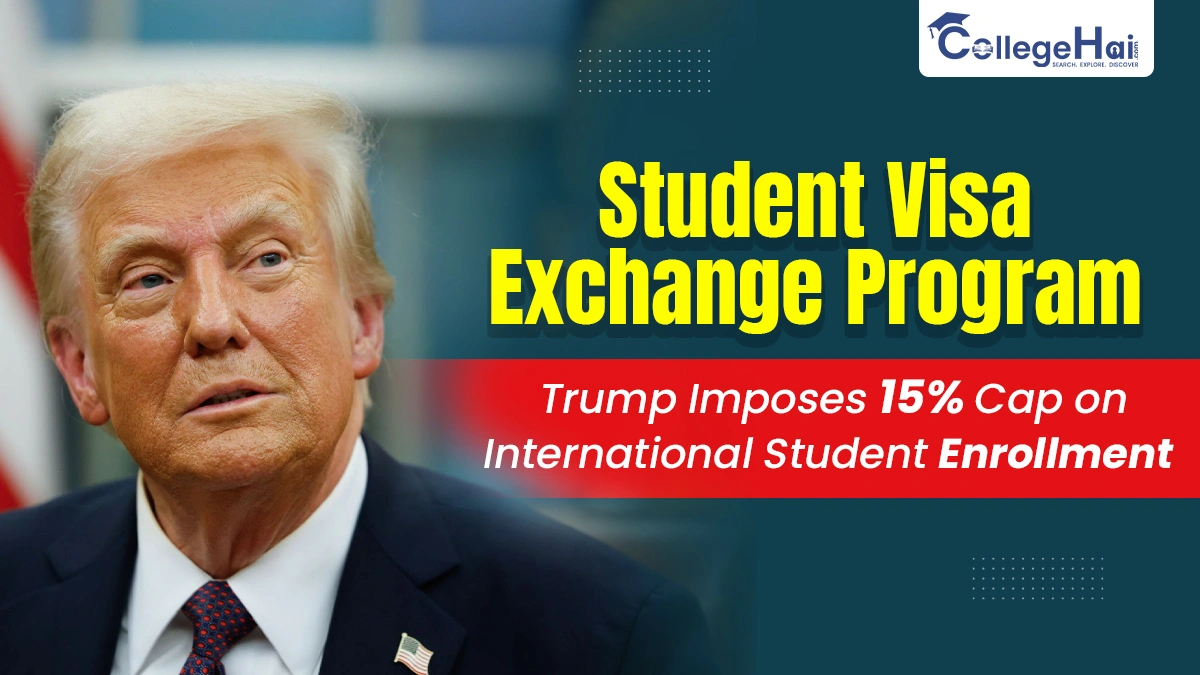
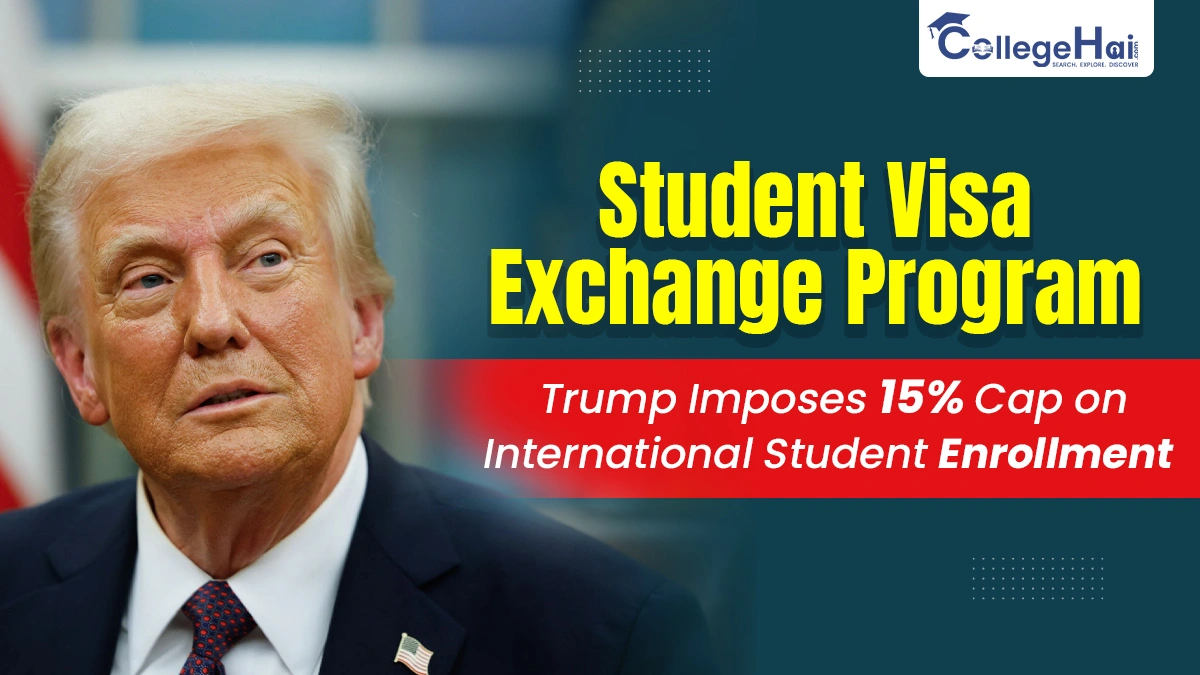
Student Visa Exchange Program: The Donald Trump administration has issued a strict order to the top nine U.S. universities, asking these institutions to restrict international undergraduate students to only 15% of their total enrollment or face losing special federal funding.
As reported by The Wall Street Journal, the government memo named "Compact for Academic Excellence in Higher Education" declares that the number of foreign undergraduates enrolled through the Student Visa Exchange Program should not exceed 15%. It further states that the students from one foreign country must not be more than 5% of the total.
The government has requested schools that have gone beyond the new limit of foreign students to take steps to decrease the number of international students in the existing classes to meet the quota—a move that could dramatically alter the composition of U.S. campuses and their worldwide rankings.
List of Nine Colleges in Memo
The nine colleges in the memo are Massachusetts Institute of Technology, University of Pennsylvania, University of Arizona, Brown University, Dartmouth College, University of Southern California, University of Texas, University of Virginia, and Vanderbilt University.
Up to this point, the White House has neither acknowledged the existence of the memo nor given any reason for the selection of these particular universities. A report by Bloomberg quotes a White House official as saying that the reason behind selecting these universities was that the leaders of these institutions were receptive to the idea and ready to give their input on the proposal.
10 Points Mentioned in Memo
Without a doubt, the administration's memo from President Trump explicitly states that universities have to eliminate the consideration of race or gender in admissions and financial aid decisions for students and staff members.
In addition to this, colleges are required to disclose anonymous admissions data such as GPA and test scores, broken down by race, nationality, and gender.
The Wall Street Journal's report indicates that universities are being asked to dismantle these departments that violate or unfairly treat conservative views.
A significant change for international students is that they all have to take a standardised test, such as the SAT, before they can be admitted.
Moreover, the institutions are given the directive to lower the tuition for a period of five years, cut the administrative costs, and make public the information on graduate earnings for each program.
Institutions with endowments larger than 2 million dollar per undergraduate student will be obliged to waive tuition fees for students enrolled in 'hard science' disciplines. Hard science disciplines are those that deal with the natural and physical sciences, including such areas as physics, chemistry, biology, astronomy, and geology.
Such a directive is sent now as a university memo and is in the middle of the ongoing tensions between the Trump administration and universities about the allegations of antisemitism and issues related to diversity policies. Columbia University and Brown University, on the one hand, have achieved multimillion-dollar agreements with the administration, whereas the likes of Harvard, on the other hand, are still in a state of disagreement.
Say that a university has accepted to sign the compact and then has not stood by its terms. The institution may have to reimburse all the federal funding it got that year, as well as any private donations.
Once a university signs the compact, it has the responsibility to self-monitor, and this means the university must hire an independent auditor who, through anonymous surveys of faculty, students, and staff, selects the institution’s adherence to the agreement. The report will be published as well as subject to inspection by the Justice Department.
According to Reuters, DePaul University is yet another American higher education institution that has to face the disruptive education and immigration policies of President Donald Trump. The University has informed staff that it will cut spending on the spot after the fall international enrollment has gone down by 30 percent.