VGU's STAMBH & TURPAN 2026 Sets a New Benchmark for Industry-Integrated Creative Education in India

On 6 June 2026, more than 327 students gathered at Clarks Amer, Jaipur. However, they were not there for a routine examination or academic exercise. Instead, they stepped into the professional arena, showcasing their skills and talents before a distinguished panel of industry experts.
STAMBH & TURPAN 2026 was this very special occasion that marked the annual flagship event organized by Centre for Design Excellence (CODE), Vivekananda Global University (VGU), Jaipur. STAMBH & TURPAN 2026 was an exclusive event which saw the gathering of students, industry experts, recruiters designers, architects and entrepreneurs at one place. It provided an ideal platform for students to showcase their skills, seek feedback from the experts and gain insights regarding career prospects.
Thus, this annual event not only provided an educational setting but acted as a stepping stone for students towards the corporate world.
Showcasing Talent Through Open Juries
Day one began with an array of open jury sessions whereby the final-year students were able to present their thesis works.
A total of 42 parallel jury sessions were held during the event giving students an opportunity to articulate their thoughts and ideas, as well as describe the processes followed and results achieved.
In contrast to the conventional assessment procedures in academic institutions, student works were evaluated by over 150 industry specialists from various fields including architecture, communication design, product design, urban planning and creative entrepreneurship.
The students were supposed to provide competent explanations to their projects and respond to questions asked by the assessors. In doing so, they got useful comments and recommendations that would be helpful in their future career advancement.
This was the most important aspect of holding such jury sessions as it helped students to get ready for the future and know what to expect in practice.
Connecting Students with Career Opportunities
The Creative Placement Drive was one of the key features of the event. While the students displayed their portfolios and projects, the recruiters and industry people engaged with the students to find suitable talent.
There were more than 150 jobs in different sectors offered at the event including:
Architecture
Product Design
Fashion Design
Communication Design
Urban Planning
Digital Media
User Experience (UX) Design
Creative Technology
The students took part in portfolio reviews and discussions with the recruiters on a professional level. Contrary to conventional placement interviews, here emphasis was laid on creative and innovative aspects of students' personalities.
This not only gave students an insight into the requirements of the industry but also provided employers with direct access to talented individuals.
Student Products Attracted Real Customers
The second half of the day was made even more interesting by this event. The Product Design Students planned an open market where almost 180 products made by them were put up for display.
The market displayed a wide range of creative and practical products, including:
Multi-purpose jewellery organizers
Ergonomic laptop stands
Decorative resin lamps
Sustainable home décor items
Handcrafted incense holders
Customized lifestyle products
Students also displayed novel board games and card games that were inspired by Indian culture, including such concepts as Bharat Battle and Guess The God. This is reflective of increasing consumer interest in creative products that are local in inspiration.
What set this experience apart from other events is the fact that students were not merely exhibiting models but designing, developing, pricing, marketing, and selling these products to customers.
As such, students got an understanding of how businesses work. Students gained insights into consumers' preferences, product pricing, marketing, and sales. This is something that one can learn only when exposed to practical experiences.
Thus, the flea market served as an example of the entrepreneurial spirit fostered at VGU.
Innovative Projects from Architecture and Fashion Students
The students of architecture also left a lasting impression on the spectators through their presentations. Some of the best presentations included the designs for 100-bedded hospitals, which will serve as future healthcare infrastructures for India.
The students designed these buildings to be efficient, sustainable, and hospitable. Such assignments helped them prove their capabilities in solving real-life issues with innovative designs.
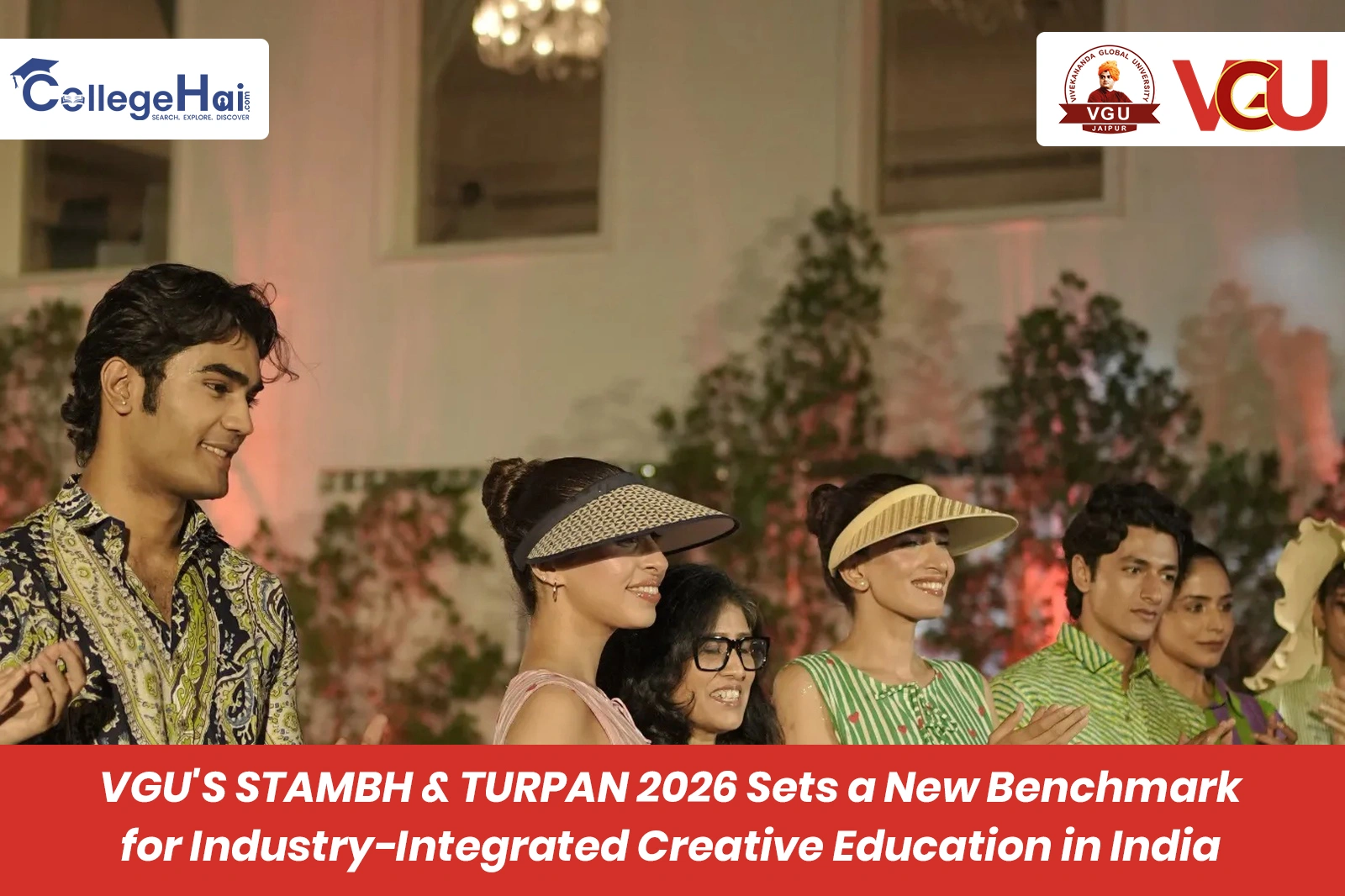
Another highlight of this competition was the fashion show held at the end, where the collections of the students studying in the Fashion and Textile Design departments were showcased.
These collections included the latest trends in the fashion industry but were commercially viable as well. The students had the chance to present their designs in front of the industry experts and potential employers.
Industry Experts Played an Active Role
The most commendable feature of STAMBH & TURPAN 2026 is the participation of eminent industry professionals.
Philip Thomas, who is the Country Head – India of World Design Council, is one such renowned personality who played an instrumental role in mentoring students and guiding faculty members with his immense expertise in the domain of design, media, and skills development.
Other notable personalities include Sunil Verma, transportation designer and educator, Rashmi Bhardwaj, Faculty Member at NID Ahmedabad, and Ritvik Yadav, Founder & CEO of Khageshvara Aviation Technology.
Their contribution made the event even more successful by imparting the right perspective to the students.
Preparing Students for India's Growing Design Industry
The fields of designing and creativity in India have been rapidly expanding. The field of designing encompasses areas such as product designing, digital media designing, fashion designing, automobile designing, interior designing, and UX (user experience) designing and has been creating job opportunities for the skilled professionals in all these fields.
According to reports, India will need tens of thousands of skilled and trained designers in the coming years. The educational institutions will have to provide training in theoretical as well as practical aspects to meet this requirement.
This principle is being applied at CODE (Centre for Design Excellence) of VGU.
Programs offered by CODE include:
Bachelor of Design (B.Des) in Fashion & Textile Design
B.Des in Interior & Product Design
B.Des in UX Design
Bachelor of Architecture (B.Arch)
Master of Design (M.Des)
These programs are designed to prepare students for the challenges and opportunities of the modern creative industry.
More Than an Event
Not only was STAMBH & TURPAN 2026 an exhibition of students' artwork; it was also an embodiment of the institution's dedication to experiential learning and industry-oriented education.
In creating the platform to bring together students, recruiters, entrepreneurs, designers, and industry veterans, the event provided participants a venue to turn their creative minds into reality. The students who participated were provided with opportunities for building confidence, gaining industrial exposure, hands-on experience, and career connections within a day's event.
Through such events, we can see how modern education extends its realm beyond classrooms and textbooks. By engaging in activities such as those that took place in STAMBH & TURPAN 2026, students from VGU benefit in terms of innovation, creativity, and their future profession.
Like what you see? Share this news on :


