Top B.Des Interior Design Colleges in Lucknow, Uttar Pradesh 2026: A Quick Guide for Students

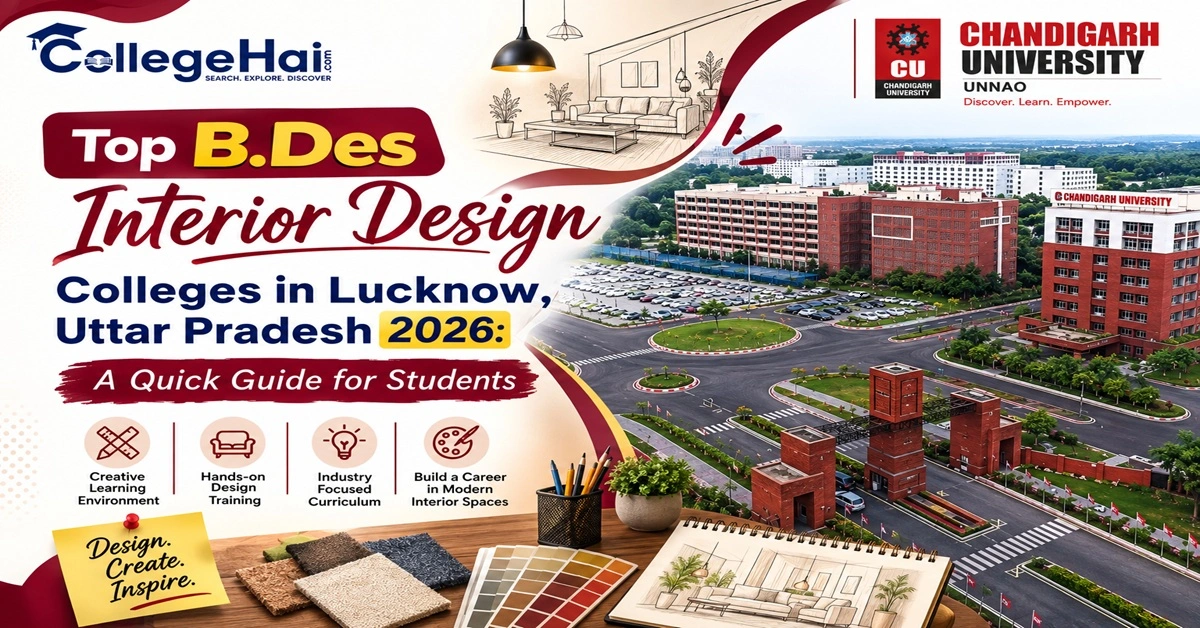
A well-designed space doesn't happen by accident. Each colour, piece of furniture, layout design, lighting and decor material is properly planned by a professional interior designer. A student who have an interest in creating beautiful and functional spaces, then you may pursue a Bachelor of Design (BDes) in Interior Design. This would be the right career path, but the program should be completed from a well-recognised university.
There is a growing demand for modern homes, smart offices, retail outlets, hotels and commercial spaces. Therefore, the demand for skilled interior designers is also rising steadily each passing year. As per Mordor Intelligence, the Indian interior design market is expected to grow from USD 35.48 billion in 2026 to USD 65.01 billion by 2031. This will create many exciting career opportunities for graduates in the design field.
Lucknow is now one of the preferred city in North India to study B.Des in Interior Design. Several universities in Lucknow and its surrounding region offer quality B.Des programs. These provide classroom learning along with practical training, design software, live projects and industry exposure.
One of the top design school in Lucknow is Chandigarh University, Uttar Pradesh (CU-UP), which is located in Unnao on the Lucknow-Kanpur Highway. The university is known for offering an Interior Design program using AI-driven technology. The course helps students to develop their creative design skills and learn modern technologies, also gaining practical industry experience.
Before exploring the best colleges, Candidates can check a quick overview of the B.Des Interior Design program from the table given below.
Details | Information |
Course Duration | 4 years |
Programme Level | Undergraduate |
Main Subjects | Space planning, materials, spatial psychology, digital modelling, and sustainable design |
Top Private University | Chandigarh University, Uttar Pradesh (CU-UP), Unnao |
Other Private Universities | Amity University, Integral University, and BBD University, Lucknow |
Top Government Option | Government Girls Polytechnic, Lucknow – diploma course |
Admission | CUCET, university entrance/portfolio tests, IUET, or JEECUP |
Eligibility | 10+2 from a recognised board, usually with 50% marks |
AI Tools at CU-UP | Midjourney, DALL-E, Leonardo AI, Google TextFX, and VR tools |
Career Options | Interior Designer, Space Planner, 3D Visualisation Artist, BIM Specialist, and AR/VR Designer |
Colleges to Consider for Interior Design in Lucknow
Students looking for studying an interior design course in Lucknow have several options across private and government institutions. Here are some colleges that a student can consider.
Private Colleges
- Chandigarh University, Uttar Pradesh (CU-UP)- CU is one of the top private universities in India. It is the first AI-augmented Multidisciplinary university. Students pursuing the B.Des Interior Design program from CU-UP get the opportunity to work in sensory studios, modern design labs & AI powered tools.
- Amity University, Lucknow - The University offers design education through its School of Architecture & Planning, with a focus on interior and related design areas.
- Integral University, Lucknow - It offers an interior design program that also covers product design concepts. This allows students to learn through practical studio work.
- BBD University, Lucknow - Babu Banarasi Das University has an interior design course under its School of Architecture & Planning. The program is taught with a strong approach on studio projects and practical learning.
Government College
- Government Girls Polytechnic, Lucknow - A government institute that offers a 3 year diploma course in interior design and decoration. This public institute can be a good option for students who wants both a practical and affordable study option.
What Does a B.Des in Interior Design Program Actually Teach?
A B.Des in Interior Design is an undergraduate program and usually takes four years to complete. Some colleges also offer this program with a duration of three years. It teaches students how to create indoor spaces that are visually appealing and function well, and suit the individuals living or working there.
Students also learn about space planning, colours, materials, furniture & fixture design, lighting themes and digital design tools that help them to visualise a space before the actual construction begins. The course combines creativity with practical problem-solving, helping students develop both skills.
By the end of the program, students can design distinct types of spaces including homes, offices, hotels, retail space and more. Moreover, the degree comes with a strong portfolio that shows their design skills and creative ideas.
Eligibility Criteria and How to Apply?
Top colleges in Lucknow that offer admission to the B.Des Interior Design course follow a bit similar process. However, different colleges may have some specific conditions or eligibility requirements.
- Eligibility: A student must have passed his/her Class 12 from a recognised board with at least 50% marks in total. Candidates should also have studied English as it is a mandatory subject.
- Entrance Exams: Government polytechnic colleges such as Government Girls Polytechnic generally accept students through JEECUP. Private universities have their own entrance process. For example, CU-UP conducts CUCET and Integral University considers IUET scores with your Class 12 marks.
- Creative Test or Portfolio: Some colleges like Amity may ask students to take a creative aptitude test, submit a portfolio and appear for a personal interview. These help colleges to understand a student's creativity and design skills in a better way.
- Scholarships: Various private universities offer merit-based scholarships based on a candidate's academic performance or entrance exam scores. This helps good performers cut down the total program cost to some extent. Students can avail scholarships up to 100% through CUCET exam.
Why Interior Design Is a Promising Career
Interior design was considered to be a small and specialised career. Now this field is growing steadily in India. The demand for skilled interior designers is increasing due to the growth of income levels, urban development, housing projects and the growth of commercial and hospitality spaces. Smart homes are becoming more common and designers who have an understanding of home automation, sustainable materials and digital design tools can have better career opportunities.
Technology, especially AI is now becoming an important part of the whole design process. Tasks such as creating mood boards, developing concepts and preparing visual presentations can be completed much faster with the help of digital tools. This allows designers to spend more time on their creative ideas and make an effective plan.
The students who are learning these tools during their studies can find them useful to begin their design careers. In Uttar Pradesh, the growth of cities, housing and hospitality projects is creating new opportunities for students who are interested in interior design. Students can explore different career options in this field with the exposure to the right skills and training.
How to Choose the Right Interior Design College?
Choosing the right interior design college is an important decision and there’s more to it than what you see in a college brochure or on a website. For shortlisting a college, an applicant must take a closer look at the learning experience, facilities available, faculty and career opportunities the institute actually offers.
1. Look at the studio and lab facilities
Interior design is a practical field, so students need more than just attending classroom lectures. Choose a college that provide design studios, material libraries, workshops, sensory labs and other facilities, as this will give students an opportunity to explore, experiment and develop their design ideas.
2. Check the exposure to digital and AI tools
Technology has become an integral part of the interior design industry. Research about whether students are trained in tools used for 3D visualisation, rendering, presentations and AI-assisted design.
3. Find out how much real-world experience you get
A good interior design program should give students an opportunity to work beyond the classroom. Students must get practical experience by performing live projects, internships, site visits, industry interactions and client-led assignments. These experiences help students to prepare well for professional life.
4. Know who will be teaching you
Faculty can make a big difference to your learning experience. The institute must assign interior design professionals with relevant industry and teaching experience to teach the program. It is essential for students to understand how much of the program is taught by interior design specialists or faculty from related fields.
5. Understand the career opportunities
Finally, look beyond general statements about "good placements." Know about how the college actually helps students in building their careers. Check if it offers internships, industry connections, recruiter opportunities and career guidance. It should also give a clear idea to the students of different career paths they can explore such as interior designer, spatial designer, set designer, visual merchandiser or design consultant.
Best Private Colleges in and Around Lucknow, UP
1. Chandigarh University, Uttar Pradesh (CU-UP)
Chandigarh University, Uttar Pradesh (CU-UP) offers a B.Des program in Interior Design that combines creative design with today’s modern technology. The B.Des Interior Design programme at CU-UP costs INR 85,000 per semester and the course has a duration of 4 years.
The course teaches students how people experience and use different spaces, it also introduces students to AI-based design and visualisation tools. Around 20% of the curriculum is focused on areas such as digital modelling, AI supported visualisation and modern design techniques. Meanwhile, another 25 to 30% involves practical learning by working on internships, workshops, field visits, capstone projects and client studio work. This allows students to apply classroom learning in real world design situations.
The program also includes specialised learning spaces such as TextFX sensory studios, where students can explore spatial psychology and sensory design. The Spatial Design & Simulation Environment allows students to work on areas such as hospitality interiors, biophilic design, neurodiversity-friendly spaces and VR/AR-based simulations.
Students also get opportunities to develop design portfolios through visualisations, walkthroughs and exhibition-based projects. This can help them to prepare well for professional opportunities after graduation.
Note: CU-UP’s fee is based on the university’s published B.Des fee structure. Students should confirm the latest fee details on the official website before applying.
Key Highlights of the B.Des Interior Design Programme at CU-UP
Parameters | What Students Get |
AI and Technology | AI-supported visualisation, digital modelling and modern design processes |
Practical Experience | Internships, workshops, field visits, capstone projects and client-based studio work |
Sensory Design | TextFX sensory studios and learning related to spatial psychology |
Spatial Design | Exposure to biophilic design, hospitality spaces and neurodiversity-friendly interiors |
VR/AR Learning | Virtual walkthroughs, simulations and sensory mapping |
Admission | Students can apply through CUCET |
Scholarships | Merit-based scholarships, including up to 100% tuition fee waiver based on CUCET performance |
Education Loan | Education loan facilities are available through the university's support process |
AI Tools Students Work with
Students get hands-on experience with AI and digital tools as part of their interior design learning. These tools help them to create design ideas, develop visual concepts, prepare presentations and explore spaces virtually effectively.
AI Tool | How Students Can Use It |
Midjourney | Create quick mood boards with different design styles, colours and lighting. |
DALL-E | Generate interior design ideas, layouts and material concepts from text prompts. |
Leonardo AI | Create detailed and semi-3D visuals for design presentations. |
Google TextFX | Explore creative language and improve storytelling for design concepts. |
VR Spatial Walkthroughs | Experience and review a space virtually before the actual construction begins. |
After completing this course, graduates can explore careers as interior designers, space planners, furniture and fixture designers, 3D visualisation artists, interior design technologists, BIM and digital modelling specialists, and AR/VR spatial experience designers.
Explore the B.Des Interior Design program at CU-UP.
2. Amity University, Lucknow
Amity University, Lucknow offers its interior design programme through the Amity School of Architecture & Planning. The course covers important areas such as space planning, materials, design concepts and visual presentation. Students are generally required to appear for a creative aptitude test followed by an interview for admission. The four year program has a total tuition fee of around INR 5.92 lakhs. Candidates should have at least 50 to 55% marks in Class 12 to meet the eligibility requirements.
3. Integral University, Lucknow
Integral University offers a BDes program that combines Product Design and Interior Design. Students get to learn about both areas before choosing their preferred stream. The course includes studio based learning along with access to design labs and material resources. To get admission, students need to have at least 50% marks in Class 12 and a valid IUET score.
4. BBD University, Lucknow
Babu Banarasi Das University offers an Interior Design programme through its School of Architecture & Planning. Students learn through classroom sessions, studio work, site visits and design projects. The course also covers basic architectural concepts along with the creative side of interior design. Since the fee details may change, students should check the university’s official website for the latest updates.
5. Government Girls Polytechnic, Lucknow
Government Girls Polytechnic, Lucknow offers a Diploma in Interior Design and Decoration. It is a government college and works well for students looking for an affordable course in this field. Admission is through JEECUP. The course fee is generally between INR 31,000 and INR 57,000, depending on the course. Pursuing this diploma program would be helpful for students who want to build their career in interior design or pursue higher studies later.
Comparison of Top Interior Design Colleges in Lucknow
Every college offers a different learning experience. The table below gives a quick overview to students based on the college type, use of AI and digital tools and what each college may be best suited for.
College | College Type | Technology & AI Exposure | Suitable For |
CU-UP, Unnao | Private | AI-based learning, sensory studios and digital simulation facilities | Students looking for technology-focused and industry-oriented design education |
Amity University, Lucknow | Private | Digital design tools with some AI exposure | Students looking for an established design school with an architecture background |
Integral University, Lucknow | Private | Digital design tools | Students interested in studying Product Design and Interior Design together |
BBD University, Lucknow | Private | Digital tools with an architecture-based approach | Students who prefer practical studio work and design projects |
Government Girls Polytechnic, Lucknow | Government | Basic digital exposure | Students looking for an affordable government option to start a career in interior design |
Eligibility and Admission Details
Students can check the basic eligibility, admission routes and other important details in the table below. The exact requirements may differ from one college to another.
Details | What Students Need to Know |
Educational Qualification | Class 12 (10+2) from a recognised board |
Minimum Marks | Around 50% in Class 12, depending on the college |
Government Admission | Admission to diploma programmes is through JEECUP |
Private College Admission | CU-UP: CUCET; Integral University: IUET; Amity University: Creative Test followed by an interview |
Conclusion
Every great space starts with an idea. Today students in Lucknow have a lot of options to make that idea into a career in interior design. Government polytechnics can be a good and affordable option. However, private universities like Amity, Integral and BBD provide a different learning experience.
But if you’re looking for a course that focuses on the future of interior design, Chandigarh University, Uttar Pradesh stands out. Its B.Des. Interior Design program combines design skills with modern tools like AI-assisted visualisation, spatial psychology and immersive technology.
The interior design industry is growing, and tomorrow’s designers will need more than just creativity. They’ll need to understand technology, people and the way spaces are changing.
If you’re ready to build those skills and start your journey in interior design, explore the B.Des. Interior Design program at CU-UP and take your first step toward designing the spaces of tomorrow.
Apply now at https://www.culko.in/
Like what you see? Share this news on :


Frequently Asked Questions
BDes in Interior Design is a four year undergraduate program that teaches students how to design functional, attractive and user friendly interior spaces. The course provides learnings like space planning, materials, furniture, colour theory, digital design and AI assisted visualisation.
Students should have completed their Class 12 from a recognised board can apply for B.Des Interior Design program. Candidates must also have 50% aggregate marks, although eligibility may vary as per the college admission process.
Admission depends on the college. Some colleges conduct their own entrance tests and others accept different aptitude tests, portfolios or interviews. At Chandigarh University, Uttar Pradesh (CU-UP) students can apply through CUCET.
The course generally includes space planning, interior materials, colour theory, furniture design, drawing, digital visualisation, 3D modelling and design presentation.
Yes, Internships are very important during Interior Design studies. They give students industry experience before they finish their degree so they can work on real projects and learn about professional design practices.
Students gain skills in space planning, material selection, furniture design, color coordination, technical drawing, 3D visualization and design presentation.
CU-UP brings together interior design education, AI-enabled learning, sensory studios and spatial simulation facilities. Students will have access to modern design technologies, digital visualization and immersive tools as part of their learning experience.
Yes, CU-UP offers career and placement assistance through industry exposure, internships, practical projects and career guidance. Students may also develop professional portfolios for possible careers in the design field.
After completing this course graduates can work as Interior Designers, Space Planners, Furniture Designers, 3D Visualisation Artists, BIM Specialists, Digital Modelling Specialists and AR/VR Spatial Designers.
Salary packages are based on a variety of factors including skills, experience, quality of portfolio and specialization. The experience that professionals gain from a strong knowledge in digital design, BIM, 3D visualization and AI gives them better opportunities.
Graduates can find work in interior design studios, architecture firms, real estate companies, furniture brands, construction companies and hospitality businesses. However, working as a freelancer or independent design business is also a good career option.
Scholarships vary by university and will be awarded based on student's academic performance, entrance test scores or other specified criteria. At CU-UP, eligible students can receive merit based scholarships. This is awarded under the university's existing scholarship policy, based on their performance in the CUCET.
About the Author
Vandana Chauhan
Content Writer